Math
The film's code
import manimgx as m


class MathHero(m.Scene):
    def construct(self) -> None:
        before = m.MathTex("a^2", "+", "b^2", "=", "c^2", font_size=96)
        after = m.MathTex("a^2", "=", "c^2", "-", "b^2", font_size=96)
        before[2].set_color(m.YELLOW)
        after[4].set_color(m.YELLOW)
        self.play(m.Write(before))
        self.play(m.TransformMatchingTex(before, after))
        self.wait()
MathTex typesets a formula written in LaTeX: fractions, roots, sums and
integrals, matrices, cases, Greek letters. Write it in a raw string, r"...", so that
Python keeps its backslashes. LaTeX packages and \def don't work; a command manimgx
doesn't know stops the scene with its name.
Give MathTex several strings, and each one is a part of the formula, to color, move or
animate alone: MathTex("a^2", "+", "b^2")[2] is the b². Parts that are written the same
in two formulas move into each other with
TransformMatchingTex.
Tex is text with formulas in it, between $ signs. If you know Typst, write
it directly: Typst takes Typst markup, and
MathTypst a formula in Typst's math syntax.
MathTex 
Code
import manimgx as m


class MathTexLatexExample(m.Scene):
    def construct(self) -> None:
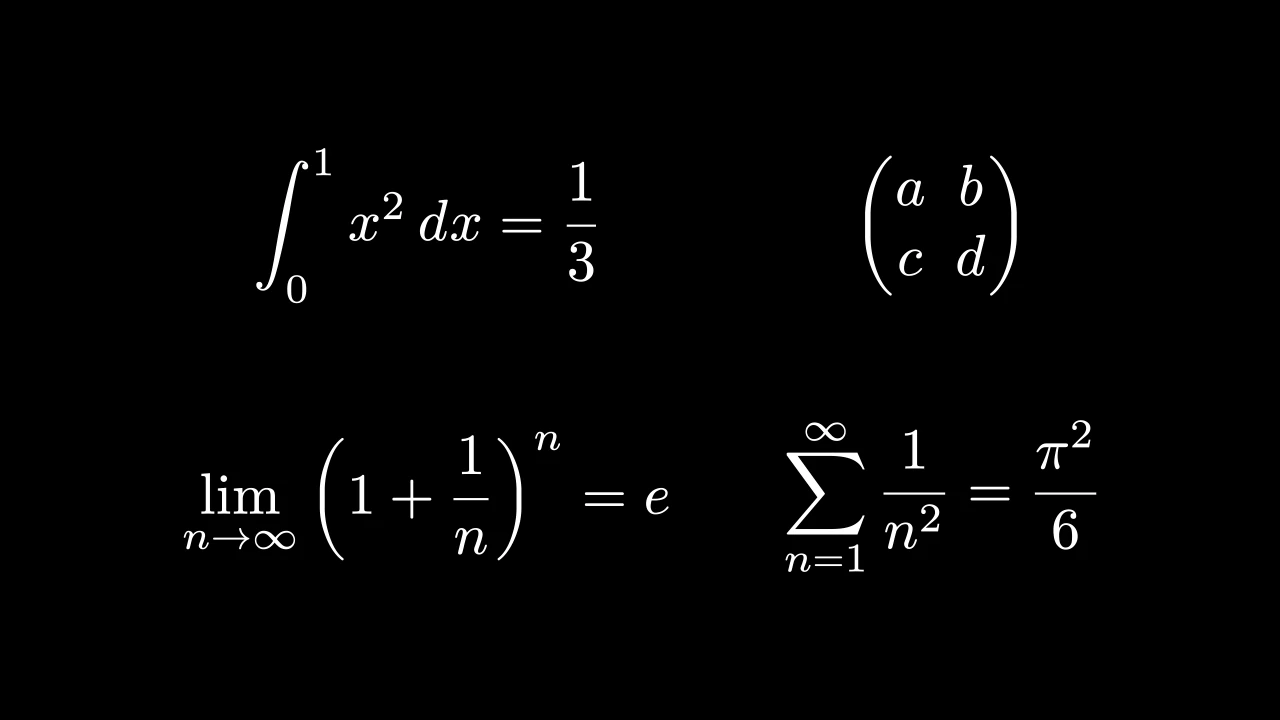
        limit = r"\lim_{n \to \infty} \left(1 + \frac{1}{n}\right)^n = e"
        formulas = m.VGroup(
            m.MathTex(r"\int_0^1 x^2 \, dx = \frac{1}{3}"),
            m.MathTex(r"\begin{pmatrix} a & b \\ c & d \end{pmatrix}"),
            m.MathTex(limit),
            m.MathTex(r"\sum_{n=1}^\infty \frac{1}{n^2} = \frac{\pi^2}{6}"),
        )
        self.add(formulas.arrange_in_grid(rows=2, buff=1).scale(1.3))
LaTeX math, typeset in the engine, a part per string: MathTex("a^2", "+",
"b^2")[2] is the \(b^2\), to color, move or match with another formula.
There is no LaTeX installation: the LaTeX is converted to Typst (by mitex, part of
the engine) and typeset in display style, in New Computer Modern Math, white unless
styled. Most of LaTeX's math converts: fractions, roots, sums and integrals,
matrices (pmatrix, bmatrix, array), cases and aligned, accents, \mathbb
and the other alphabets, \text, \left and \right, \color, \newcommand.
Packages don't — \usepackage and their commands, such as \ce or \SI — nor does
\def: a command mitex doesn't know raises a
TypstError.
The strings are one formula, joined by arg_separator and typeset whole, so parting
a formula moves none of its glyphs. Each string is a part, a
MathTexPart of the glyphs it adds, and double braces set a
part apart within a string: MathTex("{{a^2}} + {{b^2}} = {{c^2}}") has the five
parts of the first example below. A string that stands on its own (its braces,
environments and \left…\right closed within it) holds exactly its glyphs. The
rest, such as a fraction's bar or the glyphs of a fragment like "^2", go to the
first fragment between the standing strings around them: in
MathTex(r"\frac{", "a", "}{", "b", "}") the bar is the closing "}"'s, where TeX
draws it, and in MathTex(r"e^{i", r"\pi}"), split inside a term, every glyph is
the first part's. A formula whose parts can't be told apart raises ValueError.
substrings_to_isolate and tex_to_color_map split the strings further;
set_color_by_tex and
get_part_by_tex find parts by their LaTeX, and
TransformMatchingTex moves each part to the part
written the same way in another formula. Read as text (see Tex), the
strings are one text in the same way, spaces and all.
*tex_stringsThe formula, in LaTeX: a string per part (a number is written as a string), and a part per
{{…}}within one.arg_separatorWhat joins the strings into
tex_string, the formula (or text) they are typeset as.substrings_to_isolateSubstrings to make parts of their own: each string is split around every occurrence of each.
tex_to_color_mapA color for each substring, which is made a part of its own and colored.
tex_environmentHow the strings are read: with a name containing "align" (the default, "align*"), as math; with any other, or None, as LaTeX text, math between
$signs.
It also takes
the Typst keywords and the style keywords.
Source
src/manimgx/mobjects/text.py
1429 1430 1431 1432 1433 1434 1435 1436 1437 1438 1439 1440 1441 1442 1443 1444 1445 1446 1447 1448 1449 1450 1451 1452 1453 1454 1455 1456 1457 1458 1459 1460 1461 1462 1463 1464 1465 1466 1467 1468 1469 1470 1471 1472 1473 1474 1475 1476 1477 1478 1479 1480 1481 1482 1483 1484 1485 1486 1487 1488 1489 1490 1491 1492 1493 1494 1495 1496 1497 1498 1499 1500 1501 1502 1503 1504 1505 1506 1507 | |
tex_strings 
The strings, a part's each: the arguments, split at {{…}} and around the
isolated substrings.
tex_string 
The LaTeX of the whole formula, or text: the strings, joined by
arg_separator.
get_parts_by_tex 
Find the parts whose LaTeX contains tex, or is it.
texThe LaTeX to look for.
substringWhether a part whose LaTeX contains
texmatches; if not, only one whose LaTeX istex.case_sensitiveWhether upper and lower case differ.
Returns A new group of the parts themselves, in order.
Source
src/manimgx/mobjects/text.py
get_part_by_tex 
Find the first part whose LaTeX contains tex, or is it.
texThe LaTeX to look for.
substringWhether a part whose LaTeX contains
texmatches; if not, only one whose LaTeX istex.case_sensitiveWhether upper and lower case differ.
Returns The part itself, or None if none matches.
Source
src/manimgx/mobjects/text.py
index_of_part 
Find where a part is among the formula's parts; a mobject that is not one raises ValueError.
partOne of the parts.
Returns Its index, from 0.
Source
src/manimgx/mobjects/text.py
set_color_by_tex 
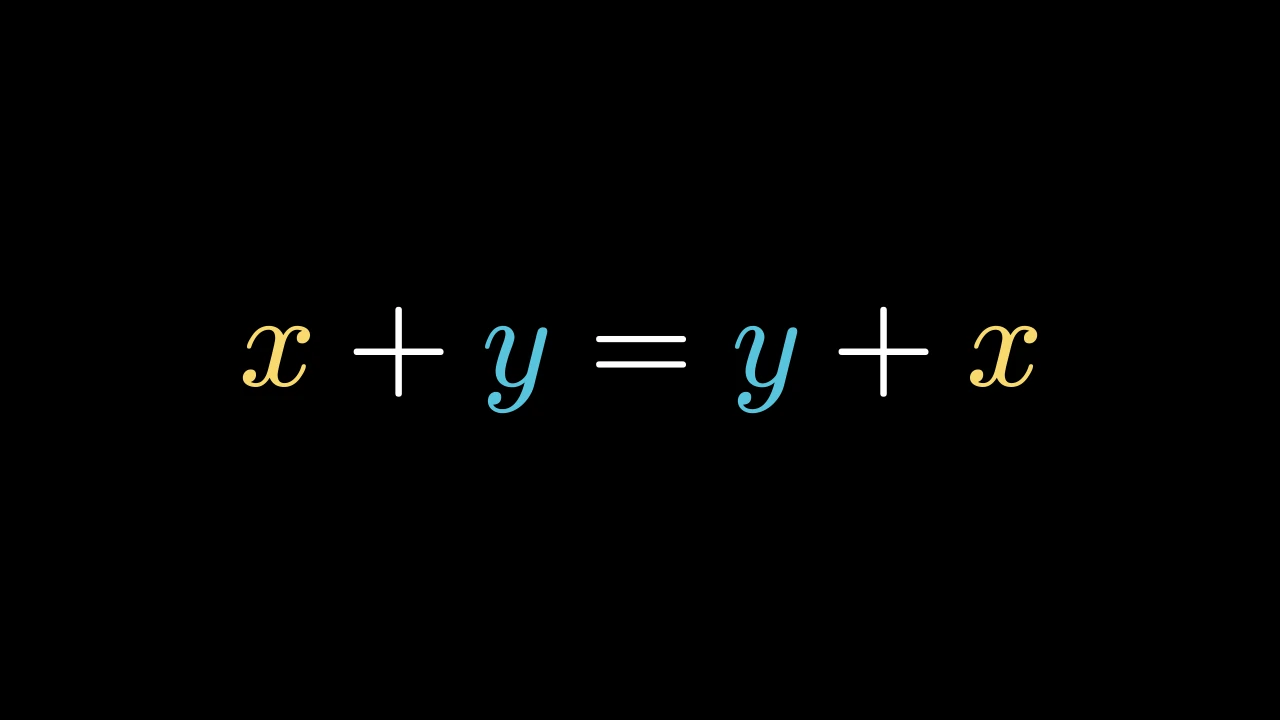
Color the parts whose LaTeX contains tex, or is it.
texThe LaTeX to look for.
colorTheir color.
substringWhether a part whose LaTeX contains
texmatches; if not, only one whose LaTeX istex.case_sensitiveWhether upper and lower case differ.
Source
src/manimgx/mobjects/text.py
set_color_by_tex_to_color_map 
Color parts by their LaTeX: for each entry, the parts whose LaTeX contains it, or is it.
texs_to_color_mapA color for each piece of LaTeX, applied in order.
substringWhether a part whose LaTeX contains a piece matches; if not, only one whose LaTeX is the piece.
case_sensitiveWhether upper and lower case differ.
Source
src/manimgx/mobjects/text.py
MathTexPart 
Tex 
LaTeX text, typeset in the engine and centered, a part per string: math goes
between $ signs.
It is a MathTex that reads its strings as LaTeX text: bold
(\textbf), italics (\emph, \textit), line breaks (\\) and inline math
convert. The text is set in New Computer Modern, as LaTeX sets it, the math in New
Computer Modern Math; white unless styled. The strings are one text, joined by
arg_separator (nothing, by default) and typeset whole, as a MathTex's are one
formula: Tex("Fade", "In") reads "FadeIn", and parting a text moves none of its
glyphs. Its parts are told apart as a formula's are; a ligature two strings share is
the first's.
*tex_stringsThe text, in LaTeX: a string per part.
It also takes
the MathTex keywords and the style keywords.
Source
src/manimgx/mobjects/text.py
Typst 
A Typst document, typeset in the engine: every glyph and shape of its layout is a part, white unless styled.
The code is Typst markup, a document's body on a page as large as what it holds:
*strong*, _emphasis_, math between $ signs, #set and #show rules, and the
rest of Typst. The parts are what Typst lays out, in document order, spaces
excluded: glyphs (TypstGlyph) and
shapes (a rule, a fraction's bar, a box). A labelled box, #box[…] <name>, is a
group: select gives it. Packages are imported from
package_path (and mitex, @preview/mitex:0.2.7, from manimgx's engine), never
downloaded; code Typst can't typeset raises a
TypstError.
Text is set in Libertinus Serif and math in New Computer Modern Math, Typst's
defaults, unless the code sets another font. The fonts are those manimgx ships, so a
document looks the same on every machine: Typst's own (these two, New Computer
Modern and DejaVu Sans Mono), Noto Sans, and Noto faces for the scripts those lack,
from Arabic, Hebrew and Devanagari to Chinese, Japanese and Korean, with symbols and
emoji; a character a font lacks is set in one that has it. Fonts in font_paths
come first, and a system font is read only for a family the code names that none of
these has. A paragraph's direction and the forms of Han characters follow the code's
lang and dir (#set text(lang: "ja"), #set text(dir: rtl)); a
Text sets them from its characters.
What Typst paints in its default ink, black, takes color, and the colors the code
sets are kept, unless paint keywords (fill_color and the rest) paint over every
part. A document is typeset once: the same code is read back from a cache on disk,
in any process.
typst_codeThe document: Typst markup.
font_sizeThe size of the text: an em is
font_size / 96scene units (0.5 at 48).typst_preambleTypst code set before the document: rules, definitions, imports.
font_pathsDirectories of font files, searched, with their subdirectories, before the fonts manimgx ships.
should_centerWhether the mobject is centered on the origin.
heightThe height to scale the mobject to, in scene units; None to size it by
font_size.widthThe width to scale it to, in scene units, after
height; None to size it byfont_size.package_pathThe directory Typst packages are imported from (as
namespace/name/versiondirectories), besides mitex, which manimgx's engine holds; None for none but mitex.font_scaleHow much larger than
font_sizethe text is set: the layout is scaled byfont_size * font_scale, while font_size readsfont_size. A Text sets it to its font's own scale, which makes a capital as tall in every font.colorThe color of Typst's default ink, black; None for white.
fill_colorA fill color for every part; None keeps the typeset ones.
fill_opacityA fill opacity for every part, from 0 to 1; None keeps the typeset ones.
stroke_colorA stroke color for every part; None keeps the typeset ones.
stroke_opacityA stroke opacity for every part, from 0 to 1; None keeps the typeset ones.
stroke_widthA stroke width for every part, in hundredths of a scene unit; None keeps the typeset ones, which scale with the mobject.
opacityThe opacity of every part's fill and stroke, from 0 to 1, where
fill_opacityorstroke_opacitydoesn't give one; None keeps the typeset ones.background_stroke_colorThe color of an outline drawn behind the fill (default black).
background_stroke_opacityThe outline's opacity, from 0 to 1 (default 1).
background_stroke_widthThe outline's width, in hundredths of a scene unit (default 0: none).
sheen_factorHow much the colors lighten toward
sheen_direction, from -1 to 1 (default 0); a negative factor darkens.sheen_directionThe direction the colors lighten toward (default
UL).joint_typeHow the stroke is joined where its path turns: round, beveled or mitered, as a two-dimensional scene draws it (see LineJointType; default AUTO: mitered).
cap_styleHow the stroke ends, at each end it shows (an open path's, a dash's): round, butt or square, as a two-dimensional scene draws it (see CapStyleType; default AUTO: butt).
shade_in_3dWhether a three-dimensional scene's light shades the mobject.
materialHow its surface reflects the scene's lights in a three-dimensional scene (see Material); None: Manim's shading (default).
nameA name for the mobject; its class's name if not given.
z_indexIts place in the drawing order: a higher index is drawn over a lower one (default 0).
targetThe state
MoveToTargetmoves the mobject to.
It also takes the style keywords.
Source
src/manimgx/mobjects/text.py
typst_code 
The Typst code the mobject was typeset from.
typst_preamble 
The Typst code set before it.
font_size 
The mobject's effective font size, including scaling. Explicit width or height determines this size when given at construction. Set it to a positive size to scale the mobject to it.
Source
src/manimgx/mobjects/text.py
select 
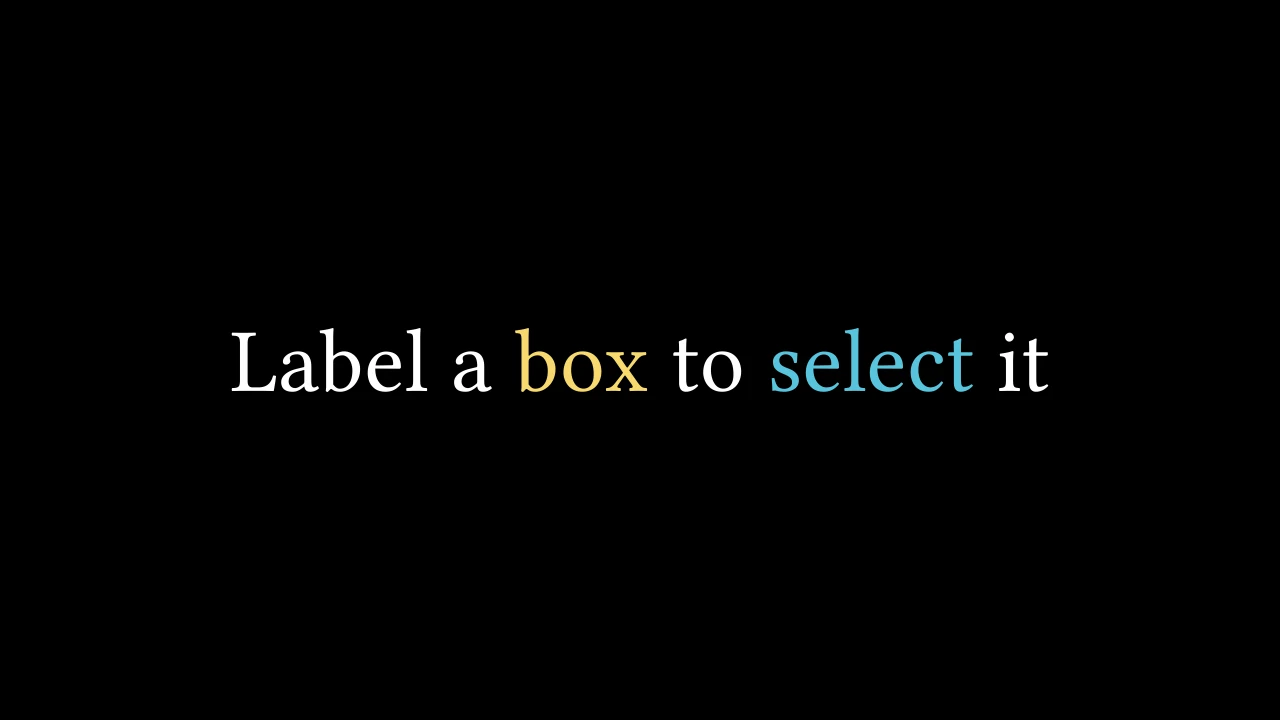
Find the parts of a labelled group: of every group with that label, as one.
A label names a box in the code, #box[…] <name>; a
MathTypst makes a group of {{ … }} too, named by
{{ … : name }} or numbered in order. An unknown label raises KeyError, a
number out of range IndexError.
keyThe label; or the number of a MathTypst's unnamed
{{ … }}group, from 0.
Returns A new group of the parts themselves (not copies), in order.
Source
src/manimgx/mobjects/text.py
scale 
Scale the mobject and its whole family about a point, as
Mobject.scale does; the strokes the typesetting drew (a
rule, a box's outline) keep their share of their part's size, unless the mobject
was made with a stroke_width.
scale_factorThe factor: 2 doubles the mobject's size, 0.5 halves it; or its factors along x, y and z.
scale_strokeWhether the other strokes' widths scale too, by the factor.
about_pointThe point that stays fixed, in scene coordinates; it takes precedence over
about_edge.about_edgeThe point of the mobject's bounding box that stays fixed, named by a direction: UP for the middle of its top edge, UR for its top right corner, ORIGIN for its center.
Source
src/manimgx/mobjects/text.py
MathTypst 
Code
import manimgx as m


class MathTypstExample(m.Scene):
    def construct(self) -> None:
        formula = m.MathTypst(
            "{{ a^2 : a }} + {{ b^2 : b }} = {{ c^2 : c }}", font_size=144
        )
        formula.select("a").set_color(m.BLUE)
        formula.select("b").set_color(m.GREEN)
        formula.select("c").set_color(m.YELLOW)
        self.play(m.Write(formula))
A formula in Typst's math syntax, typeset in display style: its parts are its glyphs and shapes, white unless styled.
MathTypst("x^2 + y^2") typesets $ x^2 + y^2 $, in New Computer Modern Math.
Double braces make groups, which select gives: {{ x^2 }}
is numbered, 0 the first, and {{ x^2 : square }} is named "square"; the braces are
not typeset.
math_expressionThe formula, in Typst math.
It also takes
the Typst keywords and the style keywords.
Source
src/manimgx/mobjects/text.py
A typeset text's parts
Every text and formula is made of glyphs, as Typst sets them: each knows which characters of its source it draws. A source Typst can't set stops the scene with Typst's error.
TypstGlyph 
One glyph as Typst set it, a part of a typeset mobject: its outline, placed, and which characters of the source it draws.
node is where the glyph's source node starts in the Typst code (-1 if it isn't
from the code), drawn the bytes of that node's text it draws, key its outline,
x_advance its width in font units.
colorThe color of both fill and stroke (default white); None for the class's default.
fill_colorThe fill's color;
colorif not given. Several colors make a gradient alongsheen_direction.fill_opacityThe fill's opacity, from 0 to 1 (default 0: no fill).
stroke_colorThe stroke's color;
colorif not given. Several colors make a gradient.stroke_opacityThe stroke's opacity, from 0 to 1 (default 1).
stroke_widthThe stroke's width, in hundredths of a scene unit (default 4; 0: no stroke).
background_stroke_colorThe color of an outline drawn behind the fill (default black).
background_stroke_opacityThe outline's opacity, from 0 to 1 (default 1).
background_stroke_widthThe outline's width, in hundredths of a scene unit (default 0: none).
sheen_factorHow much the colors lighten toward
sheen_direction, from -1 to 1 (default 0); a negative factor darkens.sheen_directionThe direction the colors lighten toward (default
UL).joint_typeHow the stroke is joined where its path turns: round, beveled or mitered, as a two-dimensional scene draws it (see LineJointType; default AUTO: mitered).
cap_styleHow the stroke ends, at each end it shows (an open path's, a dash's): round, butt or square, as a two-dimensional scene draws it (see CapStyleType; default AUTO: butt).
shade_in_3dWhether a three-dimensional scene's light shades the mobject.
materialHow its surface reflects the scene's lights in a three-dimensional scene (see Material); None: Manim's shading (default).
nameA name for the mobject; its class's name if not given.
z_indexIts place in the drawing order: a higher index is drawn over a lower one (default 0).
targetThe state
MoveToTargetmoves the mobject to.
It also takes the style keywords.
Source
src/manimgx/mobject.py
node 
Where the source node the glyph came from starts in the Typst code, in bytes. A glyph a package's code drew (a radical a package's function sets) came from the innermost element of the code around it (its equation); -1 if none is.
drawn 
The bytes of that node's text the glyph's cluster draws, from and to: of a string literal, the bytes of its value; -1, -1 if the node is an element around it.
key 
The provenance key of its outline and font carets, the same in every process. Assigning a key does not change the live glyph's outline or carets.
x_advance 
Its advance, the width it takes in the line, in font units: a ligature's carets divide it.
manimgx.drawing.typesetting.TypstError 
The error raised when Typst can't typeset a document, or LaTeX can't be converted to Typst: its message is Typst's (or mitex's), each error with the bytes of the source it is at, counted from the start of the whole document typeset — a page setup and the preamble come before the code.